
Most SEO guides tell you what to do. This one tells you what to do first, why it matters, and exactly how to do it from zero to ranking, step by step.
Let’s start with the truth nobody in SEO likes to say out loud: most content written about SEO is itself poorly optimized. It’s vague, it’s long for the sake of being long, and it doesn’t actually tell you what to do next.
This SEO guide is different. It’s built for founders, in-house marketers, and agency teams who want a clear, sequenced, no-nonsense SEO step by step guide for building organic search visibility that lasts in a world where AI has fundamentally changed how search works.
We’ve organized everything into eight concrete steps. Follow them in order. Each step builds on the last. By the end, you’ll have a complete SEO operating system, not just a list of tactics.
Before you start: what’s actually changed in 2026
SEO in 2026 is not the SEO of 2020. Three structural shifts have changed the game entirely, and understanding these SEO ranking factors is essential before you take a single step:
- AI Overviews, ChatGPT, and Perplexity now intercept millions of queries before users ever reach a website. Appearing in these AI-generated answers requires a different optimization strategy than traditional ranking.
- Search intent has become the primary ranking signal. Google’s NLP systems (BERT, RankBrain, and beyond) no longer just match keywords they evaluate whether your content genuinely satisfies what the searcher is trying to accomplish.
- E-E-A-T (Experience, Expertise, Authoritativeness, Trustworthiness) is now a practical ranking framework, not just a guideline. Shallow, generic content does not survive modern algorithms.
The good news: the fundamentals still work. Technical excellence, high-quality content, and genuine authority compound over time. The steps below account for everything that’s changed while keeping those fundamentals at the center.
Step 1 Run a Full SEO Audit Before You Do Anything Else
The most common SEO mistake isn’t doing the wrong things it’s doing things in the wrong order. Before you write a single piece of content or build a single link, you need to understand exactly where your site stands today.
An SEO audit gives you a baseline: what’s working, what’s broken, and where your biggest opportunities are. Without it, you’re guessing.
Your audit should cover four areas:
- Technical health crawlability, indexation, Core Web Vitals, site speed, mobile-friendliness, HTTPS, broken links, duplicate content, and redirect chains. Use Google Search Console (free), Screaming Frog, or Ahrefs Site Audit.
- Content performance which pages are currently driving traffic, which have dropped in the last 90 days, which rank on page 2 (positions 11–20) and could be pushed to page 1 with targeted optimization.
- Keyword positioning what terms you’re currently ranking for, where your gaps are relative to competitors, and which keywords have the most commercial value for your business.
- Backlink profile how many referring domains you have, their authority levels, any toxic links that could be suppressing your rankings, and where your competitors are getting links from.
PRO TIP
Start your audit with Google Search Console’s “Coverage” and “Core Web Vitals” reports. These are free, authoritative, and tell you exactly how Google sees your site. Fix every error flagged here before moving to anything else.
COMMON MISTAKE
Don’t skip the audit and jump straight to content. We’ve seen sites spend months producing new content only to discover that crawlability issues were preventing Google from indexing any of it. Audit first, always.
Step 2 Fix Your Technical SEO Foundation
Technical SEO is the foundation everything else is built on. Even the best content will underperform if your technical foundation has cracks. The good news: most technical issues are fixable in a few focused weeks.
Core technical priorities in 2026:
- Site speed & Core Web Vitals: Google’s Core Web Vitals (LCP, INP, CLS) are direct ranking factors. Aim for LCP under 2.5 seconds, INP under 200ms, and CLS below 0.1. Use PageSpeed Insights to diagnose and prioritize fixes.
- Mobile-first indexing: Google indexes the mobile version of your site first. In 2025, mobile devices generated 62.5% of all web traffic. If your mobile experience is poor, your rankings will reflect it.
- Crawlability & indexation: Ensure your important pages are not accidentally blocked in robots.txt. Submit an accurate XML sitemap to Google Search Console. Check that canonical tags are correctly implemented to avoid duplicate content penalties.
- HTTPS: Non-HTTPS sites are flagged as insecure by browsers and carry ranking penalties. If you’re still on HTTP, migrate immediately.
- Structured data (Schema markup): Schema helps search engines understand your content contextually and enables rich results (FAQs, how-tos, star ratings, product prices). In 2026, structured data also directly improves how AI systems cite and surface your content.
- Internal linking: A clear internal link structure distributes page authority across your site, helps Google discover new content, and guides users deeper into your site. Audit your internal links quarterly.
TOOLS TO USE FOR TECHNICAL SEO
Google Search Console (free, essential) · Google PageSpeed Insights (free, Core Web Vitals) · Screaming Frog (crawl analysis, free up to 500 URLs) · Ahrefs or Semrush (comprehensive site audits) · Schema.org + Google’s Rich Results Test (structured data)
STEP 3 Do Keyword Research the Right Way
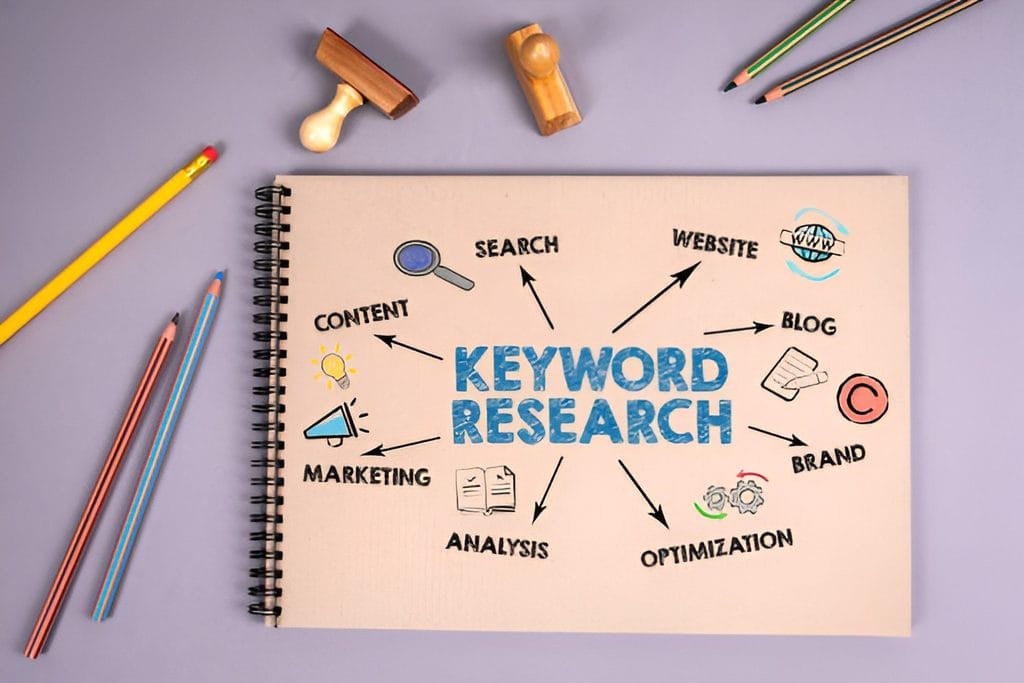
Keyword research in 2026 is not about finding the highest-volume keyword you can rank for. It’s about understanding the full landscape of how your audience searches, mapping those searches to where people are in the buying journey, and identifying the specific opportunities where you can win.
The four types of search intent you need to map:
- Informational “how to,” “what is,” “why does.” Users want knowledge. Target these with educational content that builds awareness and positions you as an authority.
- Navigational users searching for a specific brand or website. Prioritize branded keyword protection so you own your own branded results.
- Commercial “best X for Y,” “X vs Y,” “top X tools.” Users are researching before a decision. Target these with comparison content, case studies, and detailed product/service pages.
- Transactional “buy X,” “X pricing,” “hire X agency.” Users are ready to act. Target these with optimized landing pages and conversion-focused copy.
How to build your keyword list:
- Start with seed keywords 3–5 broad terms that describe your core business. For an SEO agency: “SEO services,” “organic traffic,” “search engine optimization.”
- Expand with a keyword tool Use Ahrefs Keywords Explorer, Semrush, or Google Keyword Planner to find related terms, question keywords, and long-tail variations.
- Filter by intent and difficulty Prioritize keywords with clear commercial or transactional intent. For new sites, focus on lower-difficulty (KD under 30) long-tail keywords first to build early wins.
- Analyze the SERP Before targeting any keyword, look at who’s currently ranking. If the top 10 results are all major publications or high-authority domains, that keyword may take years to crack. Find realistic targets.
- Map keywords to pages Each page on your site should target a primary keyword and 3–5 closely related secondary terms. Never target the same keyword on two different pages (this is called keyword cannibalization and it splits your ranking power).
PRO TIP
The highest-value keyword research move in 2026: find keywords where you rank on page 2 (positions 11–20). These pages already have Google’s trust. Optimizing them for the target keyword and improving their internal link support often produces first-page rankings within 30–60 days far faster than building new content from scratch.
STEP 4 Build Your Content Around Topic Clusters, Not Individual Keywords
One of the biggest shifts in SEO over the last two years is the move from individual keyword optimization to topic cluster architecture. Google no longer evaluates pages in isolation it evaluates your site’s depth and authority across an entire topic area.
A topic cluster is a group of interconnected content pieces built around a central pillar page. The pillar page covers a broad topic comprehensively. Cluster pages dive deep into specific subtopics and link back to the pillar. Together, they signal to Google that your site is a genuine authority on that subject.
How to build a topic cluster:
- Choose a pillar topic a broad, high-value subject directly relevant to your business (e.g., “SEO strategy” for an SEO agency, “email marketing” for a marketing platform).
- Write a comprehensive pillar page this should be your most in-depth piece of content on that topic: 2,000–4,000 words, covering every major subtopic, answering the most common questions, and linking out to your cluster pages.
- Identify cluster topics specific subtopics related to the pillar (
- e.g., pillar: “SEO strategy” → clusters: “keyword research guide,” “technical SEO checklist,” “link building tactics,” “on-page SEO tips,” “local SEO setup”).
- Create cluster content each cluster page should go deep on its specific subtopic, link back to the pillar page, and link to at least two or three other cluster pages.
- Build internal links every time you publish a new cluster page, go back to the pillar page and existing cluster pages and add contextual internal links to the new content.
WHY THIS WORKS
AI search optimization favor content networks over isolated pages. Brands creating pillar pages with semantic clusters see improved performance in AI Overview inclusion. Google evaluates entire content networks and rewards comprehensive topical coverage over single well-optimized posts.
STEP 05 Master On-Page Optimization
On-page SEO is the craft of making each individual page as clear and useful as possible for both search engines and real humans. It’s not about keyword density or tricks. It’s about structure, clarity, and genuine depth.
On-page optimization checklist for every page:
| ✓ Title tag includes primary keyword | ✓ Meta description is compelling (150–160 chars) |
| ✓ H1 matches the page’s primary topic | ✓ H2/H3 subheadings structure the content clearly |
| ✓ Primary keyword in first 100 words | ✓ LSI and semantic keywords used naturally throughout |
| ✓ Images have descriptive alt text | ✓ URL is short, readable, and includes keyword |
| ✓ Page has an internal link to the pillar page | ✓ Page links to 2–3 relevant internal pages |
| ✓ FAQ section with schema markup added | ✓ Content answers the full search intent, not just the keyword |
| ✓ Content is updated within the last 12 months | ✓ Author bio or E-E-A-T signals present |
The E-E-A-T principle in practice:
Experience, Expertise, Authoritativeness, and Trustworthiness are not abstract guidelines they are signals Google’s systems evaluate through your content. Here’s how to demonstrate each one:
- Experience include first-person insights, original data, case studies, screenshots, and real-world examples. Content written by someone who has actually done the thing performs better than generic summaries.
- Expertise name your authors, link to their credentials, and demonstrate deep domain knowledge. Shallow generalist content is increasingly outranked by specialist content with depth.
- Authoritativeness earn citations from other credible sources. Get mentioned in industry publications, appear on podcasts, contribute to authoritative communities.
- Trustworthiness clear privacy policies, transparent business information, consistent brand presence, secure HTTPS, and accurate, up-to-date information.
COMMON MISTAKE
Avoid writing content for the sake of length. Google’s Helpful Content system actively demotes content written primarily to rank rather than to help. Ask yourself before publishing: if someone reads only this page, do they leave with a genuinely useful answer? If the honest answer is no, rewrite it.
STEP 06
STEP 06 Build Links That Actually Move Rankings
Backlinks remain one of the strongest ranking signals in 2026. But the game has changed: it’s no longer about volume it’s about relevance and genuine authority. Ten high-quality links from trusted, topically relevant sites are worth more than a hundred generic directory links.
Link building strategies that work in 2026:
1. Digital PR and original research
Create genuinely newsworthy content original surveys, data studies, unique frameworks, or industry reports. Pitch these to journalists and publications in your space. When your research gets cited, you earn editorial links from high-authority domains that are nearly impossible to get through outreach alone.
2. Strategic guest posting
Write genuinely useful articles for reputable publications in your industry. Focus on sites where your target audience actually reads not just any site with a high domain rating. The link is valuable; the referral traffic and brand exposure are often equally valuable.
3. Competitor backlink analysis
Use Ahrefs or Semrush to analyze the backlink profiles of your top three competitors. Find sites linking to them that aren’t linking to you. These are warm prospects they’re already interested in your topic and linking to similar content. Create something better than what they linked to and reach out.
4. Podcast appearances and community authority
Podcast episode pages almost always link to the guest’s website. Getting interviewed on relevant podcasts generates backlinks, brand exposure, and referral traffic simultaneously. Answering questions on Reddit, Quora, and industry Slack communities also builds the kind of distributed authority that AI search systems increasingly favor.
5. Broken link building
Find pages in your niche that link to broken resources (404 pages). Create a better version of the broken content, then notify the site owner that their link is broken and suggest your resource as a replacement. This is one of the most reliable link acquisition tactics because you’re solving a problem for the site owner, not just asking for a favor.
PRO TIP
Focus on topical relevance above all else. A link from a mid-authority site in your exact niche will outperform a link from a very high-authority site in an unrelated industry. Google’s systems are sophisticated enough to weigh relevance heavily in 2026.
STEP 7 Optimize for AI Search Not Just Google
This is the most important new step in any 2026 SEO strategy. AI search optimization Google AI Overviews, ChatGPT, Perplexity, Gemini now intercept a significant portion of queries before users reach traditional search results. Appearing in these AI-generated answers requires specific optimization strategies beyond traditional SEO.
How to optimize for Generative Engine Optimization (GEO):
- Write direct, citable answers AI systems prefer content that answers questions concisely and clearly. For every major question your content addresses, write a short (2–3 sentence) direct answer at the top of the relevant section. These “chunks” are what AI systems extract and surface.
- Use structured data aggressively FAQ schema, HowTo schema, Article schema, and Organization schema all help AI systems parse and cite your content accurately. Implement structured data on every key page.
- Build entity authority ensure your brand, key people, and core topics are well-documented across the web: your website, Wikipedia (if applicable), LinkedIn, industry directories, Google Business Profile, and authoritative third-party mentions. AI systems use entity relationships to evaluate authority.
- Create comprehensive topic coverage AI search rewards content that covers a topic from multiple angles. A single blog post targeting one keyword is less likely to be cited by AI than a content cluster that addresses the topic from 10 different perspectives.
- Earn third-party citations being mentioned in other credible articles, podcasts, and industry resources signals to AI systems that your brand is a genuine authority. PR, guest posts, and community activity all contribute to this.
THE KEY INSIGHT
Studies show that while AI search sends less overall traffic than traditional search, the users it does send have significantly higher conversion intent with some B2B research showing AI-driven research influences up to 9.7% of revenue. Quality of traffic over volume of traffic.
STEP 8 Measure, Report, and Iterate Every Quart
SEO is not a one-time project. It’s an operating system that requires regular review, adaptation, and improvement. The teams that compound their SEO results over time are the ones that treat measurement as a discipline, not an afterthought. Consistently reviewing your SEO ranking factors every quarter is what separates sites that compound results from those that stall out.
The metrics that actually matter:
- Organic sessions and users track overall organic traffic trends and segment by page type (blog, product pages, landing pages) to understand where growth is coming from.
- Keyword rankings monitor positions for your target keywords. Track position 1–10, 11–20, and 21–50 separately. Movement from page 2 to page 1 is the highest-leverage improvement.
- Click-through rate (CTR) a high-ranking page with a low CTR means your title tag or meta description isn’t compelling enough. Test and optimize these regularly.
- Conversion rate from organic the ultimate measure. What percentage of organic visitors are becoming leads or customers? SEO success measured only in traffic is incomplete.
- Referring domains track the growth of unique referring domains over time. This is a leading indicator of future ranking improvements.
- Core Web Vitals scores monitor monthly. A score regression often precedes a traffic drop.
Your quarterly SEO review process:
- Audit identify pages that lost traffic or rankings in the last 90 days. Prioritize these for content updates.
- Update refresh your top 5 ranking pages with new data, additional depth, and updated internal links. This alone often produces ranking improvements within 4–6 weeks.
- Create publish 2–4 new cluster pages targeting keywords identified in your last research cycle.
- Build execute one focused link acquisition campaign: one piece of original research, one podcast pitching round, or one broken link building sprint.
- Report document what moved, what didn’t, and what you’re doing differently next quarter. SEO learning is cumulative
THE KEY INSIGHT
Studies show that while AI search sends less overall traffic than traditional search, the users it does send have significantly higher conversion intent with some B2B research showing AI-driven research influences up to 9.7% of revenue. Quality of traffic over volume of traffic.
STEP 9 Measure, Report, and Iterate Every Quarter
SEO is not a one-time project. It’s an operating system that requires regular review, adaptation, and improvement. The teams that compound their SEO results over time are the ones that treat measurement as a discipline, not an afterthought. Consistently reviewing your SEO ranking factors every quarter is what separates sites that compound results from those that stall out.
The metrics that actually matter:
- Organic sessions and users track overall organic traffic trends and segment by page type (blog, product pages, landing pages) to understand where growth is coming from.
- Keyword rankings monitor positions for your target keywords. Track position 1–10, 11–20, and 21–50 separately. Movement from page 2 to page 1 is the highest-leverage improvement.
- Click-through rate (CTR) a high-ranking page with a low CTR means your title tag or meta description isn’t compelling enough. Test and optimize these regularly.
- Conversion rate from organic the ultimate measure. What percentage of organic visitors are becoming leads or customers? SEO success measured only in traffic is incomplete.
- Referring domains track the growth of unique referring domains over time. This is a leading indicator of future ranking improvements.
- Core Web Vitals scores monitor monthly. A score regression often precedes a traffic drop.
Your quarterly SEO review process:
- Audit identify pages that lost traffic or rankings in the last 90 days. Prioritize these for content updates.
- Update refresh your top 5 ranking pages with new data, additional depth, and updated internal links. This alone often produces ranking improvements within 4–6 weeks.
- Create publish 2–4 new cluster pages targeting keywords identified in your last research cycle.
- Build execute one focused link acquisition campaign: one piece of original research, one podcast pitching round, or one broken link building sprint.
- Report document what moved, what didn’t, and what you’re doing differently next quarter. SEO learning is cumulative.
PRO TIP
Set up a simple SEO dashboard in Google Looker Studio (free) connecting Google Search Console and Google Analytics. Track your five core metrics weekly. This 20-minute weekly habit will tell you more about what’s working than most paid tools.
The Honest Truth About SEO Timelines
SEO is not a channel you turn on and see results from in a week. It’s a compounding asset. Most new pages take three to six months to reach their full ranking potential. Most new domains take six to twelve months to develop enough authority to consistently rank for competitive terms.
This is not a bug it’s the feature. The compounding nature of SEO is what makes it one of the highest-ROI marketing channels available. A piece of content you publish today can still be sending qualified traffic five years from now, for zero ongoing cost.
The startups that win at SEO are not the ones that try to shortcut the process. They’re the ones that execute consistently, measure rigorously, and stay patient long enough for the compounding to kick in.
Start with step one of this SEO guide. Do it properly. Then move to step two of your SEO step by step guide to lasting organic growth.